
GTA 6's Map Is Reportedly Twice the Size of GTA V. That Might Be the Least Interesting Thing About It
GTA 6's map is reportedly twice GTA V's size, with Vice City twice Los Santos. The far more important question is what Rockstar is filling Leonida with.
For several years, GTA VI fans have been reconstructing Leonida from trailers, road signs, skylines, leaked coordinates and the sort of forensic obsession normally associated with intelligence agencies. Now Rockstar has finally begun providing meaningful scale information, and the numbers are enormous.
TGG says Rockstar told him the overall GTA VI world is roughly twice the size of GTA V's map and around three times the playable area of Red Dead Redemption 2. Vice City itself is reportedly about twice the size of Los Santos, while Vice City plus the surrounding developed towns represent a dramatically larger amount of urbanized space than GTA V offered.
Those figures are going to dominate map-size discussions until release.
They probably shouldn't.
The biggest lesson Rockstar learned from Red Dead Redemption 2 is that perceived size is not measured in square kilometers.
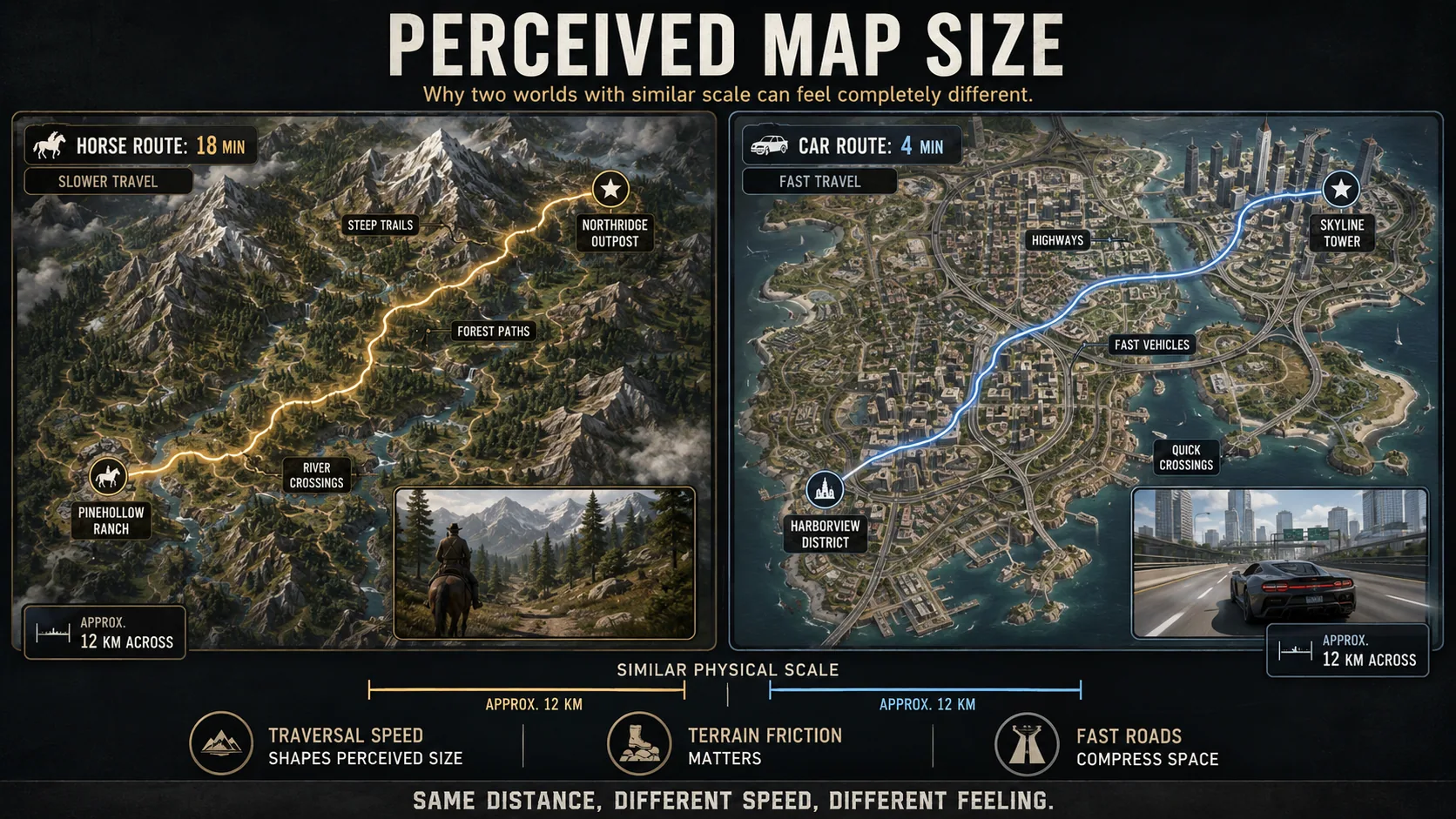
Red Dead Redemption 2 demonstrates why map measurements mislead people
Ride across Red Dead Redemption 2 and the world feels enormous.
Part of that is literal geography, but a major part is speed. Arthur Morgan travels primarily by horse. Terrain slows him down. Rivers matter. Mountains block direct routes. Forests obscure sightlines. Towns become distinct destinations because reaching one requires a journey.
GTA V can contain a physically large landmass while feeling smaller because a supercar crosses huge distances rapidly. Highways compress space. Aircraft compress it further. A location fifteen minutes away in Red Dead might be three minutes away in GTA.
This is why saying GTA VI is "three times bigger than Red Dead Redemption 2" tells us less than it initially seems to.
How quickly can players travel?
How many highways cut directly through Leonida?
How much coastline must be navigated around rather than crossed?
How dense is Vice City?
How much of the landscape contains activities worth stopping for?
Those questions determine how large a world feels once somebody has played it for fifty hours.
Vice City being twice Los Santos may matter much more than the total map number
GTA V has an unusual geographical imbalance.
Los Santos is dense and interesting. Then the player leaves the metropolitan area and huge portions of the northern map become mountains, desert, highways and smaller settlements. Those spaces are useful for variety, but the overwhelming concentration of GTA V's urban life exists in one corner.
The reported GTA VI numbers suggest Rockstar is approaching Leonida differently.
Vice City itself is said to be around twice Los Santos's size. More importantly, TGG's preview information describes a much greater amount of developed space outside the main city. That could produce a world where leaving Vice City does not mean leaving dense human environments behind.
That matters enormously in a Grand Theft Auto game because so many of its systems depend on civilization.
Cars need roads.
Robberies need businesses.
Police need witnesses.
Social satire needs people.
A vehicle-theft system needs vehicles worth stealing.
A relationship system benefits from places the characters can actually visit together.
Empty wilderness can be beautiful, but GTA's mechanics become most interesting when people, property and traffic are close enough to collide.
Rockstar has officially named six major parts of Leonida
Rockstar's own GTA VI site currently highlights Vice City, Leonida Keys, Grassrivers, Port Gellhorn, Ambrosia and Mount Kalaga National Park. The page deliberately presents Leonida as more than one giant Miami parody, with each region carrying a different social and environmental identity.
Rockstar has officially highlighted six major areas across Leonida, from dense Vice City to wetlands, industrial regions and Mount Kalaga National Park.
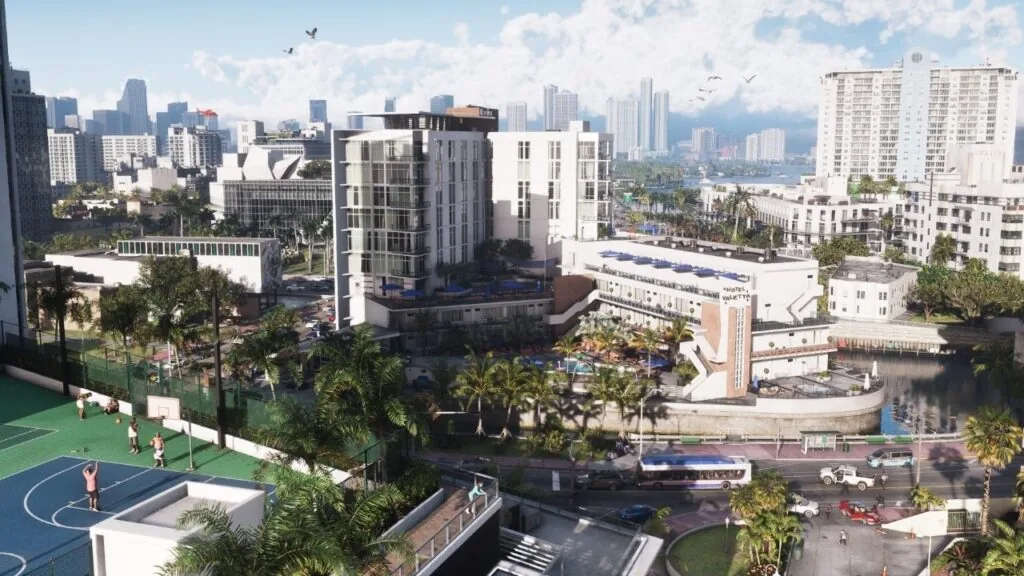
Vice City is the obvious center. It is neon, wealth, beaches, clubs, music, crime and Florida's ability to turn ordinary news stories into material that already sounds like GTA satire.
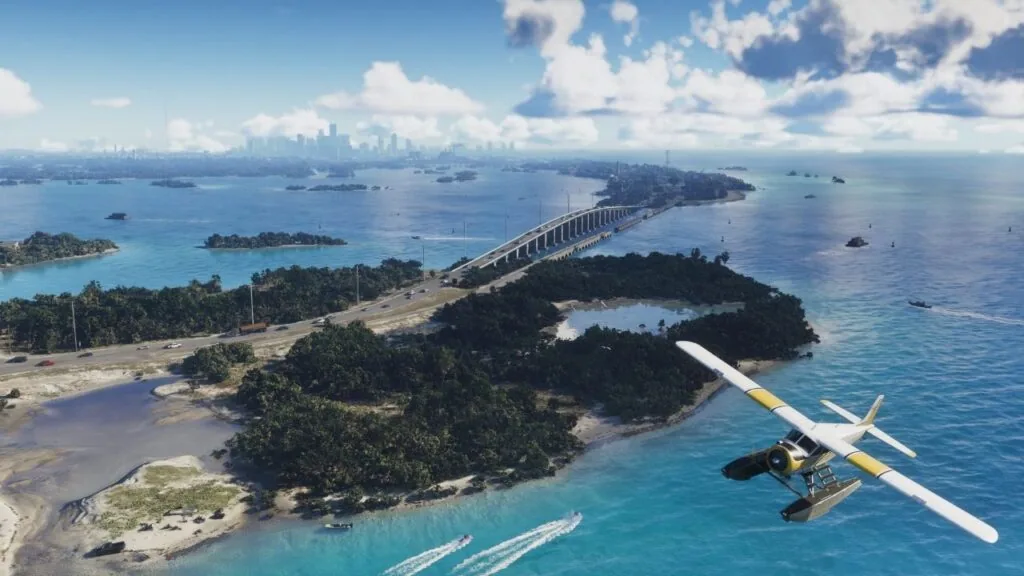
The Leonida Keys provide a very different rhythm. Jason begins with connections to smuggling and drug-running communities there, and Rockstar's own character material ties his early circumstances to Brian Heder's boat yard and criminal network.
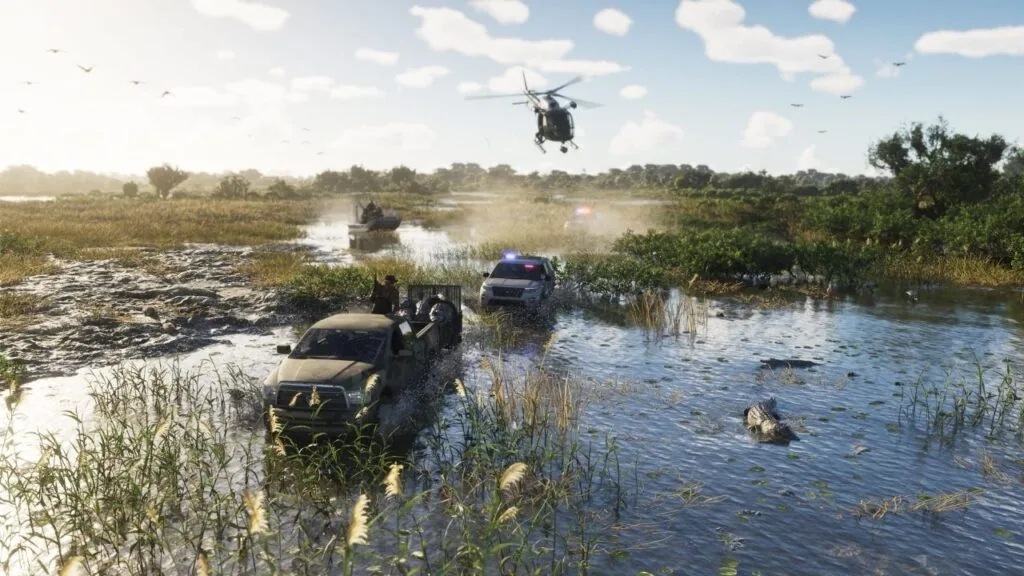
Grassrivers gives the state its wetlands. This is where alligators, waterways, airboats and Florida's strange boundary between suburbia and wilderness can become gameplay rather than backdrop.

Port Gellhorn looks positioned as a rougher coastal city, the sort of economically bruised place that can support motels, abandoned commercial property, low-level crime and a completely different atmosphere from Vice City's luxury towers.
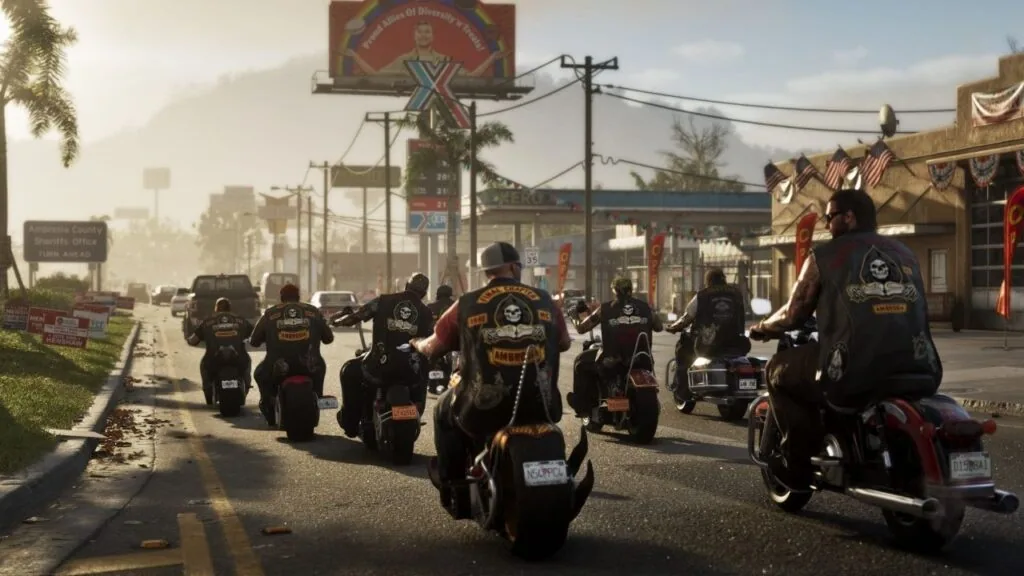
Ambrosia appears more industrial and inland, while Mount Kalaga gives Rockstar something the classic Vice City setting never had: substantial wilderness and elevation.
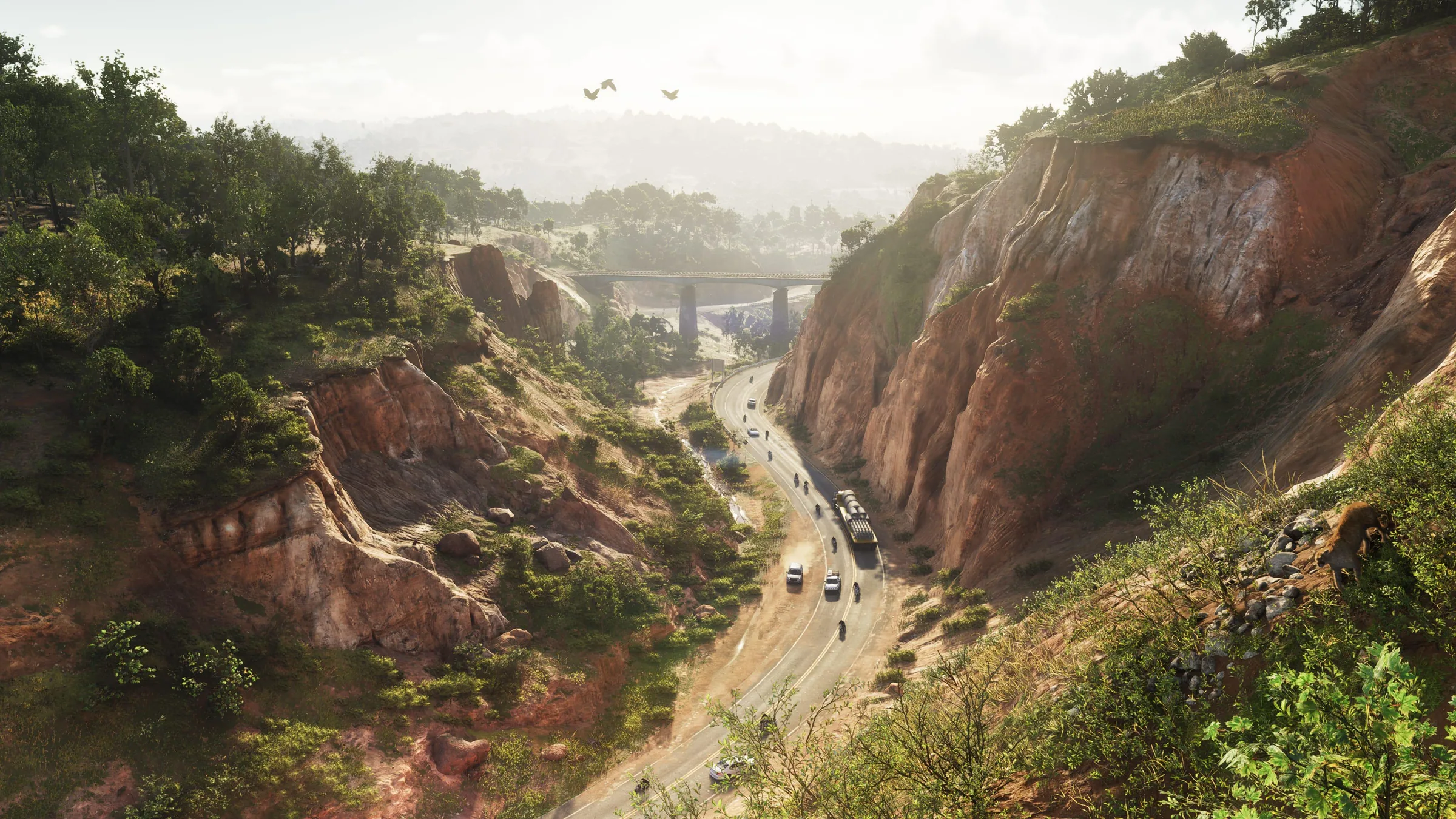
These are not simply biomes selected from an open-world checklist. If Rockstar succeeds, each should support a different kind of criminal story.
The real map-size number is probably "how many doors matter?"
Open-world marketing has trained players to associate size with value.
That worked when moving through a 3D city was itself novel. It is much less persuasive in 2026. We have played enormous maps containing vast quantities of absolutely nothing.
GTA VI's more interesting promise is density.
Preview reporting describes more enterable businesses and interiors, ambient events, NPC conversations that can lead somewhere, safehouses with more functionality and activities spread throughout Leonida. One French preview reportedly involved the journalist asking Rockstar to move freely around portions of the world rather than simply following a scripted presentation, with the resulting coverage emphasizing the quantity of usable spaces.
The question I want answered is therefore not whether Leonida contains twice as many square kilometers.
I want to know how often something makes me stop the car.
If the answer is "constantly," the map will feel enormous regardless of the measurement.
GTA VI also appears to be attacking the map-icon problem
A giant world full of content can paradoxically become less interesting when the map explains all of it in advance.
Many open-world games tell players where every activity lives. This is efficient, but it changes exploration into navigation. Instead of noticing the world, the player notices the interface.
GTA VI preview material suggests Rockstar is hiding at least some discoveries inside environmental behavior. NPC conversations can draw attention. Strange situations can appear without a giant mission marker. Characters can be followed or overheard, and they may react if they realize they are being watched.
This is very close to one of Red Dead Redemption 2's greatest strengths. Riding toward smoke in the distance often felt more compelling than selecting an icon because the player discovered the event through the world itself.
Apply that idea to a metropolitan environment containing millions of possible distractions and GTA VI could make exploration feel considerably less mechanical.
Social media may function as another map
One of GTA VI's more intriguing ideas is an in-world social media system.
This could easily become nothing more than a collection of jokes. Rockstar loves parody, and a fictional Florida-style feed practically writes itself.
The better possibility is using social media as a discovery mechanism.
If NPCs upload bizarre events occurring elsewhere in Leonida, the player's phone can become a window into the larger simulation. See a viral video of something happening at a beach, recognize the location and decide to visit it. Suddenly a parody social network is also an organic activity system.
That is much more interesting than another set of icons.
Water could finally become first-class geography
Florida is defined by water.
The Keys, wetlands, canals, coastline and islands give Rockstar an opportunity to make boats and aquatic travel genuinely useful rather than recreational novelties. Scuba diving and kayaking are already among the activities shown or described. A large map broken apart by water also changes how players perceive distance because the shortest line between two points may not be the fastest route by road.
GTA V contains a huge coastline, but most players spend the overwhelming majority of their time treating water as the place where the road ends.
Leonida has a chance to make it part of the transportation network.
That would increase the effective complexity of the map without adding a single square mile.
A map can be too large
There is a point where scale works against a game.
Driving for several minutes through an environment you have already exhausted is not immersion. It is commuting.
The reported size of GTA VI therefore creates expectations Rockstar still needs to justify. Twice GTA V is impressive only if Rockstar's content density, travel systems and regional variation grow with it.
Fortunately, everything shown so far suggests the studio understands that problem.
Rockstar's own marketing barely talks about square mileage. Instead, it introduces characters, neighborhoods, social groups and places. TGG's preview emphasizes density and decision-making. IGN's reporting spends more time discussing what happens inside the world than measuring its boundaries.
That is encouraging.
The internet will eventually calculate GTA VI's exact land area, water area, road length and building footprint within an inch of its life.
Players will decide whether Leonida feels large using a much simpler measurement.
They will look at the clock, realize they were supposed to start a mission two hours ago, and wonder where the evening went.