
10 Ways GTA 6 Is Taking Red Dead Redemption 2's Best Ideas and Making Them Faster
GTA 6 does not look like Red Dead Redemption 2 with cars. It looks like Rockstar is adapting RDR2's best simulation ideas to a much faster world.
There is an easy version of GTA VI that Rockstar could have made.
Take GTA V, dramatically improve the graphics, enlarge the map, add a female protagonist, modernize the vehicles, build another enormous online mode and collect several billion dollars.
Nothing about GTA V's commercial performance required a philosophical reinvention.
The interesting thing about GTA VI's preview material is how often its ideas seem to come from Red Dead Redemption 2, a much slower and more deliberate game. Rockstar appears to be taking the systems that made RDR2 feel unusually inhabited, then asking whether they can survive inside a city full of smartphones, sports cars and automatic weapons.
These ten parallels are where that influence looks strongest.
1. NPCs are becoming people you interact with, not targets or traffic
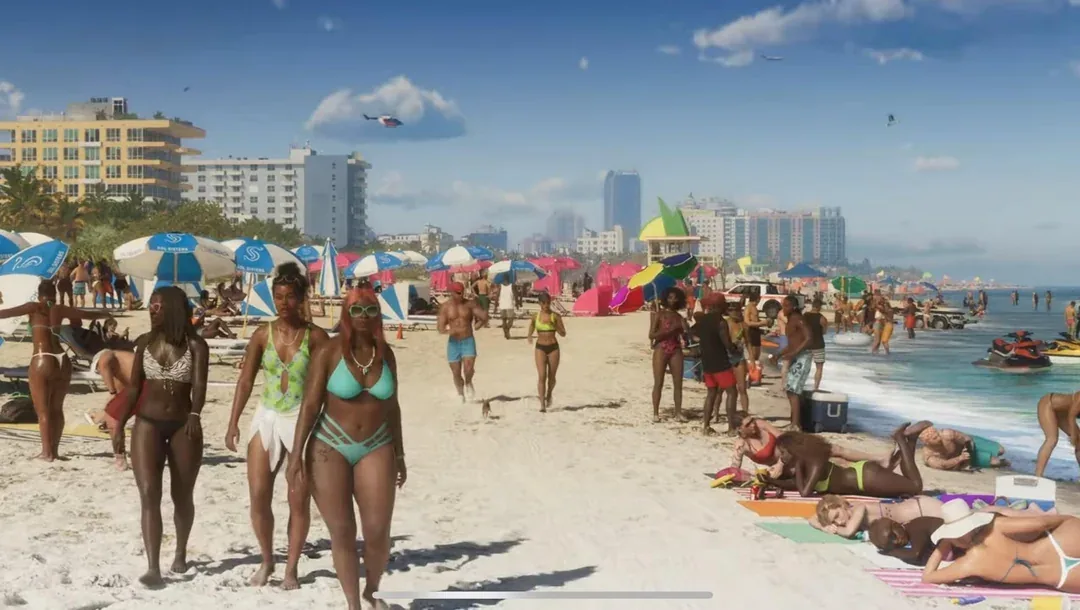
Red Dead Redemption 2's greet and antagonize system sounds trivial on paper, but it fundamentally changes how the player relates to strangers. Arthur can acknowledge somebody without beginning a mission, buying something or attacking them.
GTA VI appears to expand contextual civilian interaction in a similar direction. Preview reports describe options for de-escalation and provocation, NPCs reacting to suspicious behavior and strangers capable of turning situations into conversations or confrontations.
The important inheritance from Red Dead is not a particular button prompt.
It is the idea that a stranger can matter before becoming mission content.
2. Random encounters can emerge from observation
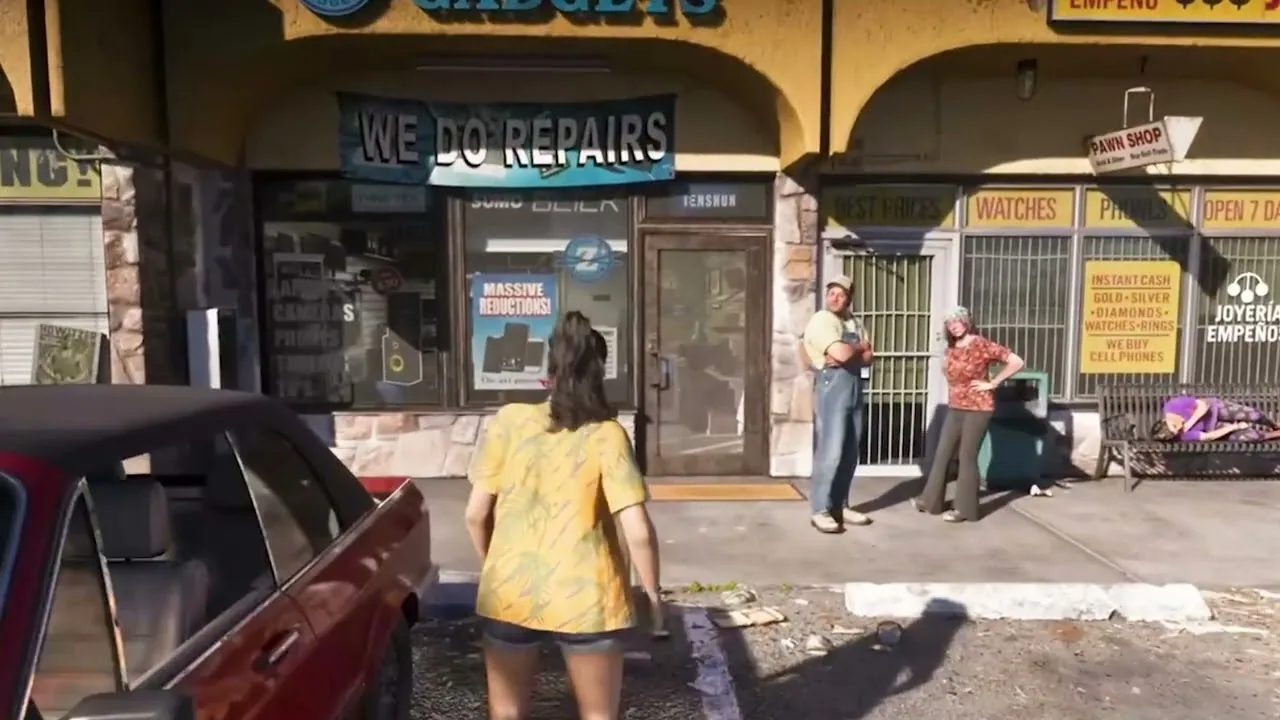
RDR2 is at its best when something on the road makes you stop without the game explicitly ordering you to.
A stranger needs help.
Smoke appears somewhere unusual.
Two people are arguing.
A crime unfolds.
An animal behaves strangely.
GTA VI reportedly contains situations that can be noticed through environmental cues and overheard conversations rather than always arriving through map markers. Rockstar says it wants the boundary between open-world activity and authored story content to become less obvious.
The challenge will be sustaining this inside a much busier world. Vice City could contain hundreds of people in situations where a western road contains five.
3. Safehouses are beginning to resemble camps
The gang camp is RDR2's emotional anchor.
It is a place to eat, sleep, talk, hear conversations, observe changing relationships and understand what the gang looks like when nobody is shooting.
GTA VI cannot copy that structure directly because Jason and Lucia are not traveling with Dutch's entire criminal family.
Instead, Rockstar can use shared homes and safehouses as persistent social environments. Characters maintain routines, appearance changes can be managed there, and Jason and Lucia's relationship can continue developing between formal missions.
A home that changes over sixty hours is much more powerful than a save icon with a bed.
4. Character appearance reflects time and behavior
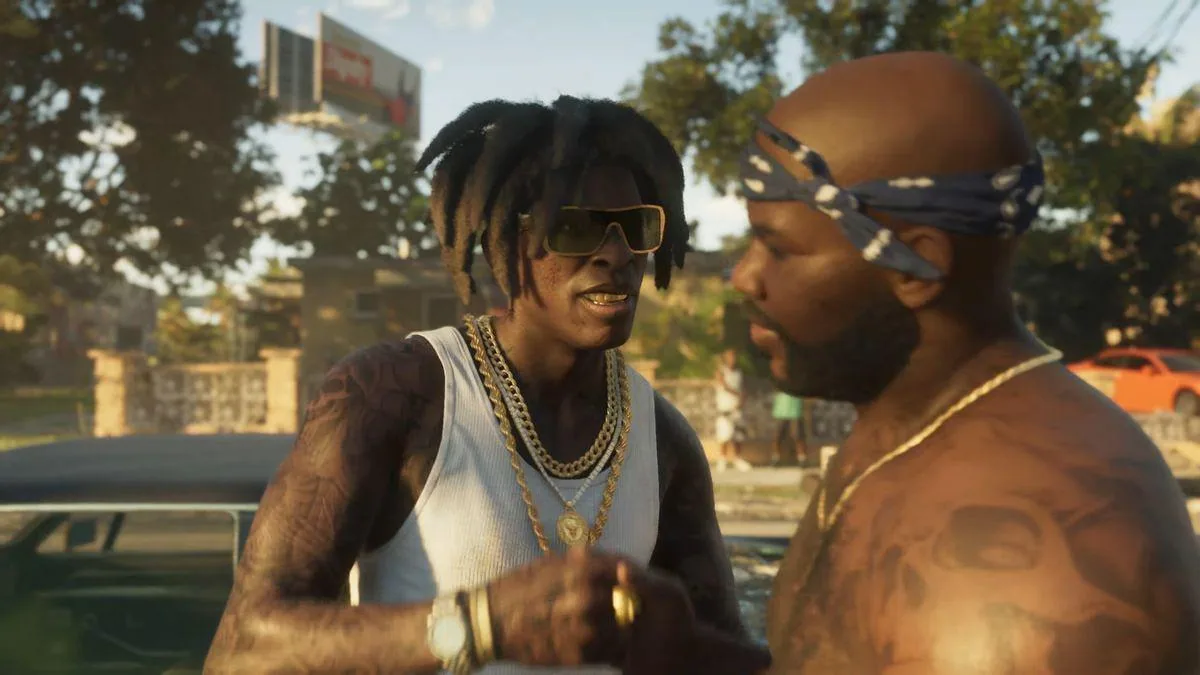
Arthur's hair grows. His beard grows. His weight can shift. Clothing interacts with weather. Dirt and injuries make the character look as though they have physically existed in the world.
GTA VI brings back some of that embodied simulation for Jason and Lucia, with exercise, eating, hairstyles and physical changes reportedly affecting appearance.
This is not unprecedented in GTA. San Andreas experimented aggressively with body simulation in 2004.
What Red Dead demonstrated is how much more convincing those systems become when integrated subtly rather than treated like an isolated minigame.
5. Wildlife is something to observe rather than merely run over
RDR2 built an entire natural-history layer around its animals.
Players could study species, track them, hunt them and record information.
GTA VI obviously has different priorities, but IGN's detailed breakdown indicates animals such as dogs can be studied in addition to ordinary interactions.
Leonida's wetlands, coastline and national park give Rockstar an enormous range of wildlife to use.
If the studio applies even a fraction of Red Dead's ecological attention, animals can help differentiate regions rather than exist as environmental decorations.
6. Honor has mutated into Criminal Profile
Arthur Morgan's Honor system is explicitly moral.
Help people and behave decently, Honor rises.
Become cruel and destructive, Honor falls.
GTA needs something less judgmental because criminality is built into its premise. Rockstar cannot realistically punish Jason for stealing cars when the game is called Grand Theft Auto.
The Criminal Profile appears to solve this by asking what kind of criminal the player becomes rather than whether crime itself is moral. Consistent unnecessary violence can have consequences, while behavior required by missions is not necessarily judged identically.
That is a clever adaptation of RDR2's long-term behavioral memory to a series where the protagonist is supposed to break the law.
7. Mundane actions can strengthen characterization

Red Dead spends enormous amounts of animation budget on things faster games would skip.
Arthur picks items up.
He eats.
He drinks coffee.
He cleans weapons.
He brushes his horse.
Taken individually, these actions can seem unnecessarily slow. Collectively, they create physicality.
GTA VI's version is unlikely to copy the pacing, but the philosophy remains visible. Phones are physical objects. Characters can exercise. Food matters. Vehicles can store equipment. Everyday couple behavior receives bespoke animation.
Rockstar seems interested in making Jason and Lucia touch the world instead of operating it exclusively through invisible menus.
8. Travel can become storytelling time
RDR2 uses horse journeys for conversation because characters often travel long distances together.
GTA VI has a speed problem. A sports car can complete a journey before a lengthy conversation finishes.
Giving Jason or Lucia the option to ride as passenger while the other drives provides one solution. Taxis and other transportation can create similar downtime.
The goal is not to slow every trip.
It is to create enough situations where the player can look away from steering and pay attention to the people or city around them.
9. The world can react to reputation rather than resetting constantly
RDR2 remembers more about Arthur than most open-world games remember about their protagonists.
His Honor affects reactions.
Bounties persist.
Communities can become hostile.
GTA VI's Criminal Profile, witness system and relationship state suggest Rockstar is again interested in persistence. The player can escape one police chase without necessarily erasing the broader behavioral history being built across Leonida.
That is arguably the most important RDR2 influence because it changes the psychological relationship between action and consequence.
10. Rockstar is trying to make authored content feel discovered
Red Dead Redemption 2 contains an enormous amount of highly authored material that does not feel like a conventional quest.
That is the trick.
Somebody still wrote the dialogue.
Somebody animated the encounter.
Somebody placed the actors.
Somebody tested every outcome.
Yet the player remembers finding it naturally.
GTA VI's previews repeatedly emphasize this same goal. Rockstar wants events, NPC behavior and optional narrative material to blend into exploration rather than sitting in separate categories.
If it works, that may be Red Dead Redemption 2's greatest contribution to GTA VI.
Not horses.
Not beard growth.
Not slower animations.
A world where carefully authored content has learned how to pretend nobody placed it there.