
10 GTA 6 Features That Could Make GTA V Feel Ancient Overnight
GTA V defined open-world gaming for more than a decade. These 10 GTA 6 systems show just how much Rockstar is changing underneath the graphics.
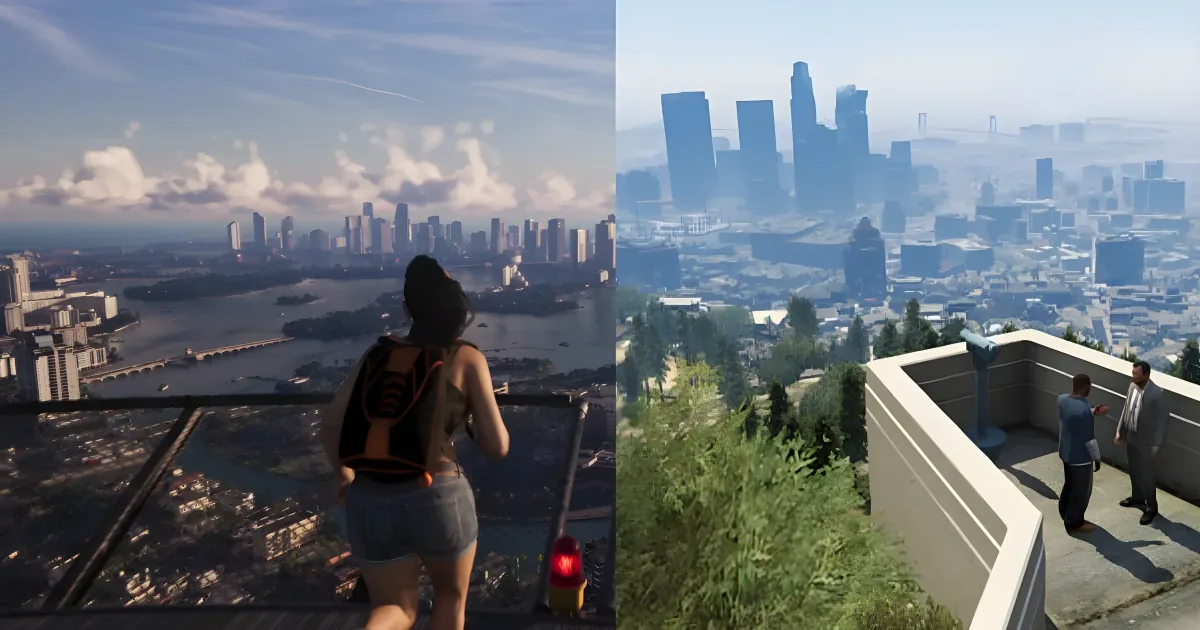
GTA V has lived for so long that it is easy to forget what kind of hardware it was originally designed around. The game launched in 2013 on PlayStation 3 and Xbox 360, machines designed in the middle of the previous decade. Rockstar has upgraded GTA V repeatedly since then, but prettier reflections cannot change the assumptions beneath a world originally built around 2005-era console architecture.
GTA VI is the first new Grand Theft Auto designed after Red Dead Redemption 2, after SSDs became standard console storage, after modern CPUs gave open-world simulations substantially more breathing room, and after Rockstar spent more than a decade observing how millions of people behave inside GTA Online.
The Extended Look makes the generational graphical difference obvious. These ten systems reveal the much bigger generational difference underneath it.
1. Police remember descriptions instead of simply knowing who you are
GTA V's wanted system remains fun because it is fast and legible, but its logic falls apart immediately under scrutiny. Commit a crime and the game knows who should be chased regardless of whether anybody had a useful view of the suspect.
GTA VI connects police response to information. Witnesses, alarms, appearance, clothing and vehicles can all matter, and players can reportedly invalidate portions of a police description by changing how they look or what they drive.
The difference is subtle until you imagine returning to GTA V afterward. A police officer magically identifying Trevor from three blocks away may suddenly feel like a system from another era.
2. Stealing parked cars can require actual theft
GTA V's parked vehicles have one security level: press the button and wait for the animation.
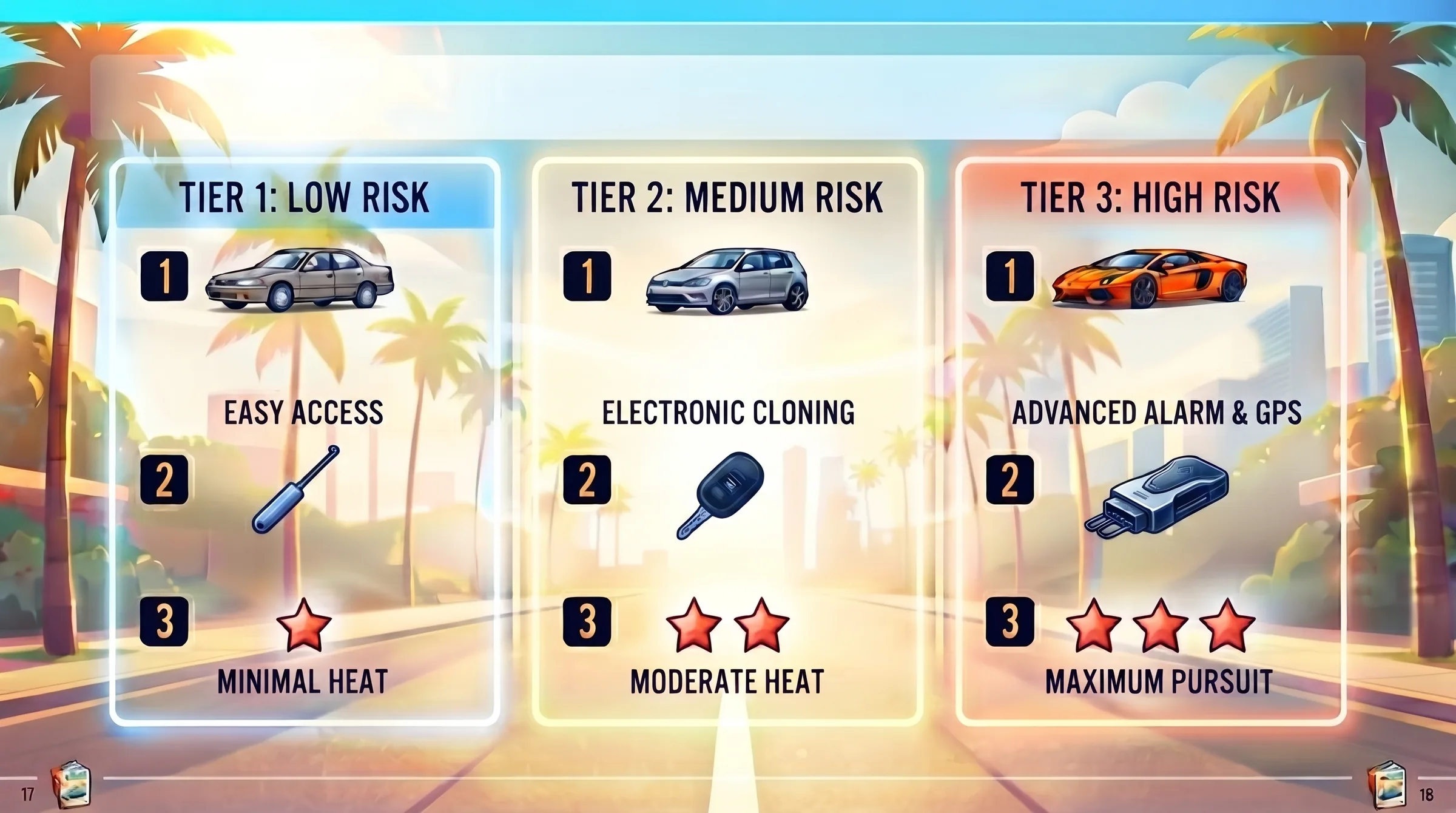
GTA VI reportedly distinguishes between older locks, modern electronic security, alarms and trackers. Specialized tools can become necessary, while the WAINK phone application can provide information about a vehicle before the player steals it. Vehicles intended for long-term ownership can require additional criminal processing rather than instantly joining the character's permanent collection.
Rockstar is turning the franchise's title into a mechanic.
It took long enough.
3. Jason and Lucia can function as an actual team
GTA V allowed three protagonists to share missions, but the free-roam relationship between them was limited.
GTA VI lets Jason and Lucia move through Leonida together or separately. They can reportedly meet outside missions, ride together, divide driving and shooting roles, and split apart during police searches when being identified as a pair becomes dangerous.
The other protagonist is becoming a strategic resource rather than merely somebody available through the character wheel.
4. Your behavior can build a persistent Criminal Profile
GTA V is remarkably forgiving about personality inconsistency. Franklin can spend a mission expressing hesitation about reckless violence, then the player can spend half an hour firing rockets into traffic without that behavior meaning anything to his character.
GTA VI's Criminal Profile system is designed to track broader patterns in how players behave. Rockstar has deliberately avoided describing it as a simple morality meter, and required mission violence does not necessarily carry the same meaning as repeatedly escalating ordinary situations for no reason.
If the implementation is strong, the sandbox and narrative may finally acknowledge that the person controlling Jason has been behaving like an absolute lunatic for forty hours.
5. Bodies and hair can change because of what you actually do
San Andreas famously allowed CJ to gain muscle, gain weight and alter his appearance through activity. GTA IV largely abandoned that simulation, and GTA V never returned to it in a substantial way.
GTA VI is bringing pieces of it back. Preview information describes exercise, eating and lifestyle affecting Jason and Lucia's physical appearance, while hair and facial hair can change over time.
This does not need to become a calorie-management simulator. Its real value is making the protagonist look like somebody who has spent months living the life the player chose.
6. NPCs appear capable of reacting to context rather than playing one animation
Rockstar has been steadily improving ambient NPC behavior for years, with Red Dead Redemption 2 providing the clearest example. GTA VI reportedly expands conversational interactions, confrontations, reactions to following or eavesdropping, civilian aggression and more varied behavior when chaos develops nearby.
The important part is not that pedestrians possess more animations. It is that their reactions appear tied to why something is happening. A person noticing that Jason has been following them creates a fundamentally different interaction from a generic pedestrian shouting because the player bumped into their shoulder.

7. Safehouses are becoming places instead of save icons
A GTA V safehouse gives the player useful facilities, but there is very little reason to think of it as a living social environment.
Previewers have compared GTA VI's homes more closely with Red Dead Redemption 2's camps. Characters have routines, players can change appearance and interact with the space, and the homes can function as relationship environments for Jason and Lucia.
This can make downtime meaningful. Returning home becomes something a player might choose because they wonder what is happening there, not only because they need to change a shirt.
8. The phone belongs to the world rather than floating above it
GTA V's phone is essentially a themed menu overlay.
GTA VI reportedly treats the phone more like a physical object the protagonist takes out and looks at. Social media, the camera, transportation services and other functions operate through something Jason or Lucia visibly holds. The protagonists can consume social content, while their fugitive status reportedly creates reasons not to become people constantly broadcasting their own locations.
That sounds cosmetic, but diegetic interfaces matter because they make menus feel like activities occurring inside the fiction.
9. More activities seem connected to the world instead of existing as disconnected minigames
Pool, mini golf, kayaking, scuba diving, gyms, shopping and other activities have appeared across the Extended Look and preview coverage.
The quantity is not what makes them interesting. GTA V already has hobbies.
The difference is how many GTA VI systems appear willing to interact. Going to a gym can affect appearance. Spending time together can affect Jason and Lucia's relationship. Exploring can expose activities and narrative opportunities that were not visible from the map. Money spent on ordinary life may matter within a wider economy.
Activities stop being menu completion and begin supporting the simulation.
10. Rockstar is deliberately blurring the border between "mission" and "not mission"
This could be GTA VI's most important change.
GTA V has an obvious rhythm. Drive toward a letter or marker. Enter the mission. Watch the game establish the scenario. Complete the designed sequence. Return to free roam.
Rockstar has said it wants GTA VI to feel less divided, with open-world discoveries and narrative content flowing into one another more naturally. Previewers describe ambient events, optional goals with narrative ramifications and situations that do not necessarily advertise themselves as conventional quests.
That is exactly what an open-world sequel should improve after thirteen years.
The biggest problem GTA V faces in 2026 is not that its textures are old.
It is that players have become extremely good at seeing the machinery underneath open-world games.
GTA VI's real challenge is making us forget the machinery is there.