
GTA 6's Police Don't Just Chase You. They Remember What You Look Like
GTA 6 is rebuilding the wanted system around witnesses, suspect descriptions, disguises, vehicles and six police stars. Here's why it changes everything.
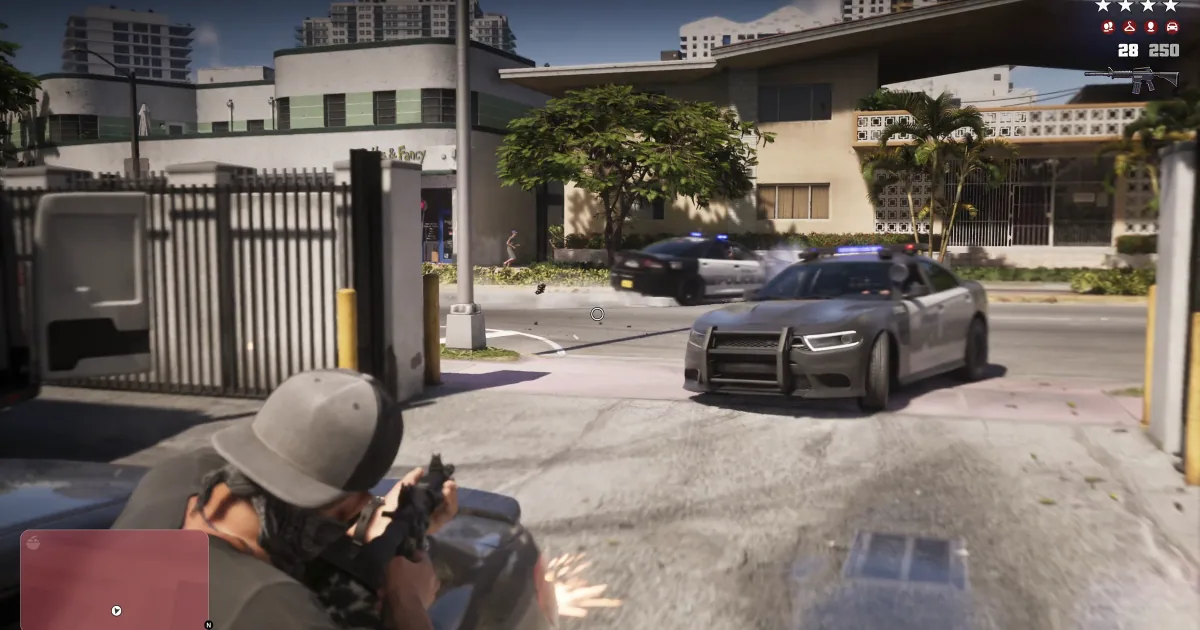
The wanted level may be the oldest piece of Grand Theft Auto's visual language. Commit a crime, receive a star, commit something worse, receive more stars. Eventually the city seems to mobilize an entire defense budget because you stole somebody's sedan and made several extremely poor decisions afterward.
The system works because it is immediately understandable, but it has always contained an obvious abstraction: the police somehow know that you committed the crime. A pedestrian can be nowhere nearby, a camera can be nowhere in sight, and yet the moment the game decides an offense counts, law enforcement receives an almost supernatural understanding of the culprit.
GTA VI is apparently replacing that assumption with information.
The six-star scale is returning after GTA V topped out at five, but the additional star is arguably the least important change. Preview information describes a wanted system in which crimes need witnesses or alarms, police receive details about what those witnesses observed, and escaping means disrupting the connection between yourself and that description.
That could produce the first GTA in which escaping the police actually resembles escaping the police, rather than leaving a colored search circle.
The police cannot search for information they do not have
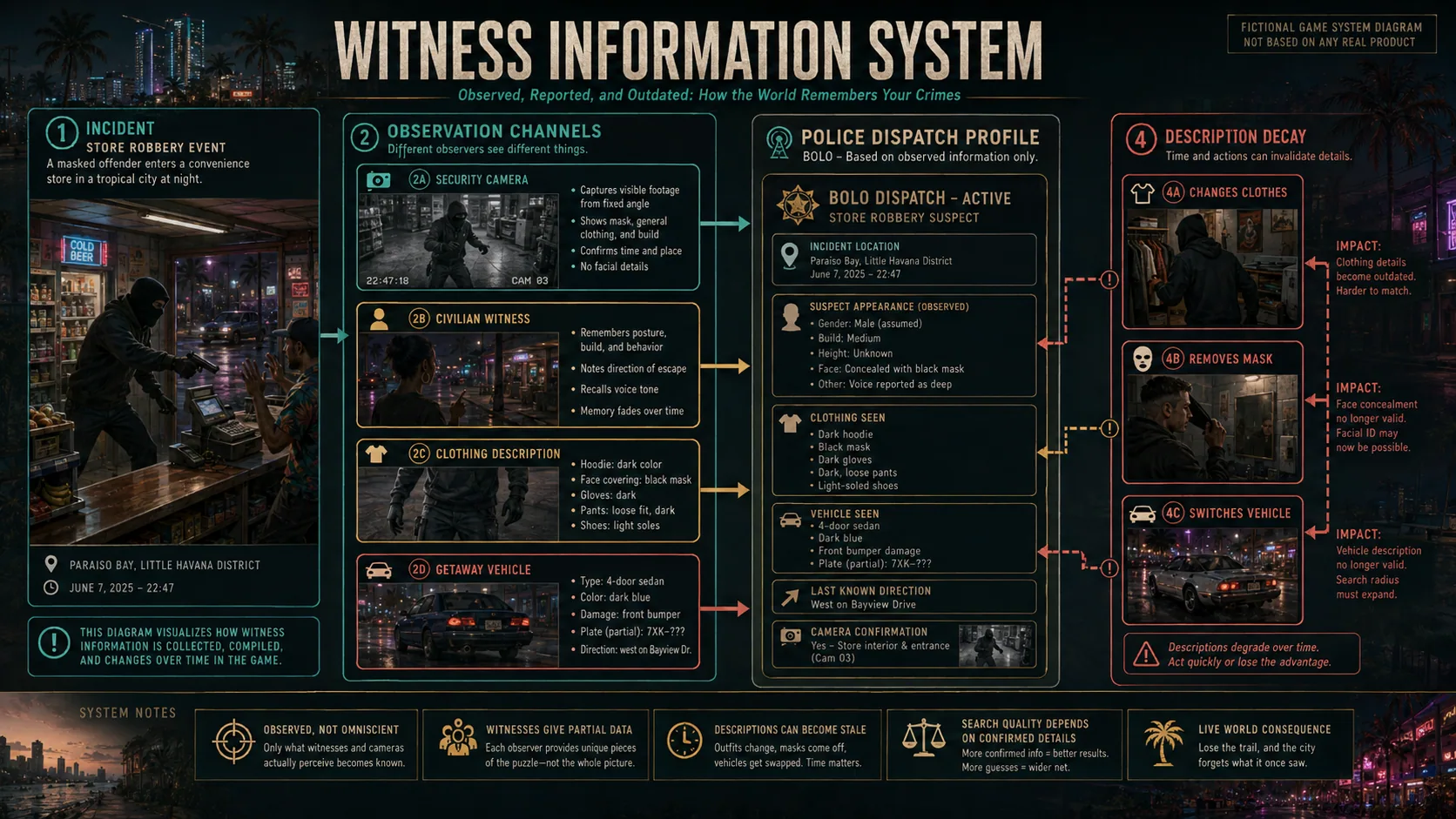
Imagine Jason walks into a store while wearing ordinary clothes and no mask. A camera records him, a clerk sees him clearly, and he leaves in his own recognizable car.
The robbery might earn only a modest wanted response, but he has made almost every possible mistake.
The police may know his physical appearance, clothing and vehicle. Driving three streets away and hiding behind a building no longer changes those facts. Even if patrol cars momentarily lose visual contact, Jason is still driving the exact vehicle dispatch told them to find.
Now change the scenario. Jason enters masked, keeps the robbery controlled, leaves before a useful description develops, switches vehicles and removes the face covering elsewhere. The same basic crime produces a completely different information trail.
That is an enormous philosophical shift.
Clothing finally has a purpose beyond making your character look ridiculous
GTA customization has traditionally been cosmetic. Players spend an unreasonable amount of time choosing clothes because looking good while committing felonies is apparently important, but the outfit rarely influences how the game treats the character.
GTA VI ties clothing into police recognition.
Preview reporting says that if police receive an outfit description, simply putting on glasses or adding a hat will not necessarily erase it. A more meaningful clothing change can remove that piece of identifying information. Spare outfits stored in a personal vehicle's trunk therefore become useful criminal equipment rather than merely a wardrobe convenience.
That opens interesting possibilities for preparation. A player heading toward a planned robbery might keep a change of clothes in the getaway vehicle, wear a mask before cameras ever see a face, use an unregistered or disposable vehicle and avoid unnecessary confrontations.
GTA has allowed role-playing like this for years.
GTA VI appears willing to reward it.
Masks make sense only if somebody is capable of seeing your face
The same logic applies to face coverings.
Masks have existed in previous GTA games, but their practical effect has been inconsistent because the wanted system often knows the player's identity regardless of what anybody could reasonably have observed. GTA VI's witness model gives them an obvious mechanical purpose.
If a camera records a masked Lucia, the camera may establish that a robbery happened without necessarily giving police Lucia's face. Remove the mask after escaping the scene and she no longer resembles the description witnesses gave.
A system like this does not need to become a hardcore stealth simulator to improve GTA dramatically. It only needs to recognize basic cause and effect.
Police know what somebody told them.
If nobody saw something, police should not magically know it.
Your getaway car can become evidence
Vehicle recognition is where the system could become particularly good.
Car chases have always been one of GTA's strengths, but the usual escape strategy rewards keeping the fastest vehicle available until the wanted stars disappear. GTA VI's police can reportedly receive a description of the vehicle used during a crime. That means the fastest getaway car might become the worst car to remain inside five minutes later.
A chase can therefore develop stages. Use one vehicle to escape immediate danger, abandon it somewhere useful, move on foot through a route police vehicles cannot follow, and acquire different transportation after the search has shifted elsewhere.
Rockstar has been emphasizing narrower streets, alleys and on-foot escape opportunities as part of urban police encounters. Once a pursuit reaches three stars or more, simply driving faster may become considerably less reliable than it was in GTA V.
This could finally make Vice City's geography matter during a pursuit.
Jason and Lucia can create a very unusual getaway problem
Dual protagonists make identification more interesting because the police can reportedly know that two suspects are traveling together.
Suppose Jason and Lucia rob somewhere as a pair. Witnesses report a man and woman leaving in one vehicle. The police are therefore searching for a couple matching certain descriptions.
The pair can split.
One character might continue moving with the compromised vehicle while the other disappears into a crowd. Perhaps one deliberately draws police attention while the second escapes. Switching characters stops being merely a camera transition and becomes part of manipulating the information available to the authorities.
That is a good example of several GTA VI systems overlapping instead of existing as separate menu features.
Six stars are back, but Rockstar should be careful what six stars mean
The return to six wanted stars will inevitably produce YouTube thumbnails involving tanks, explosions and somebody testing whether it is possible to survive for an hour.
That is fine. GTA should still be GTA.
The danger is making the upper end of the wanted system so militarized that all the new subtleties become irrelevant. If five or six stars eventually turn the city into an endless stream of omniscient enemies spawning around the player, the witness and identity systems stop mattering precisely when the game is most intense.
The better approach would be escalation in capability, not just quantity.
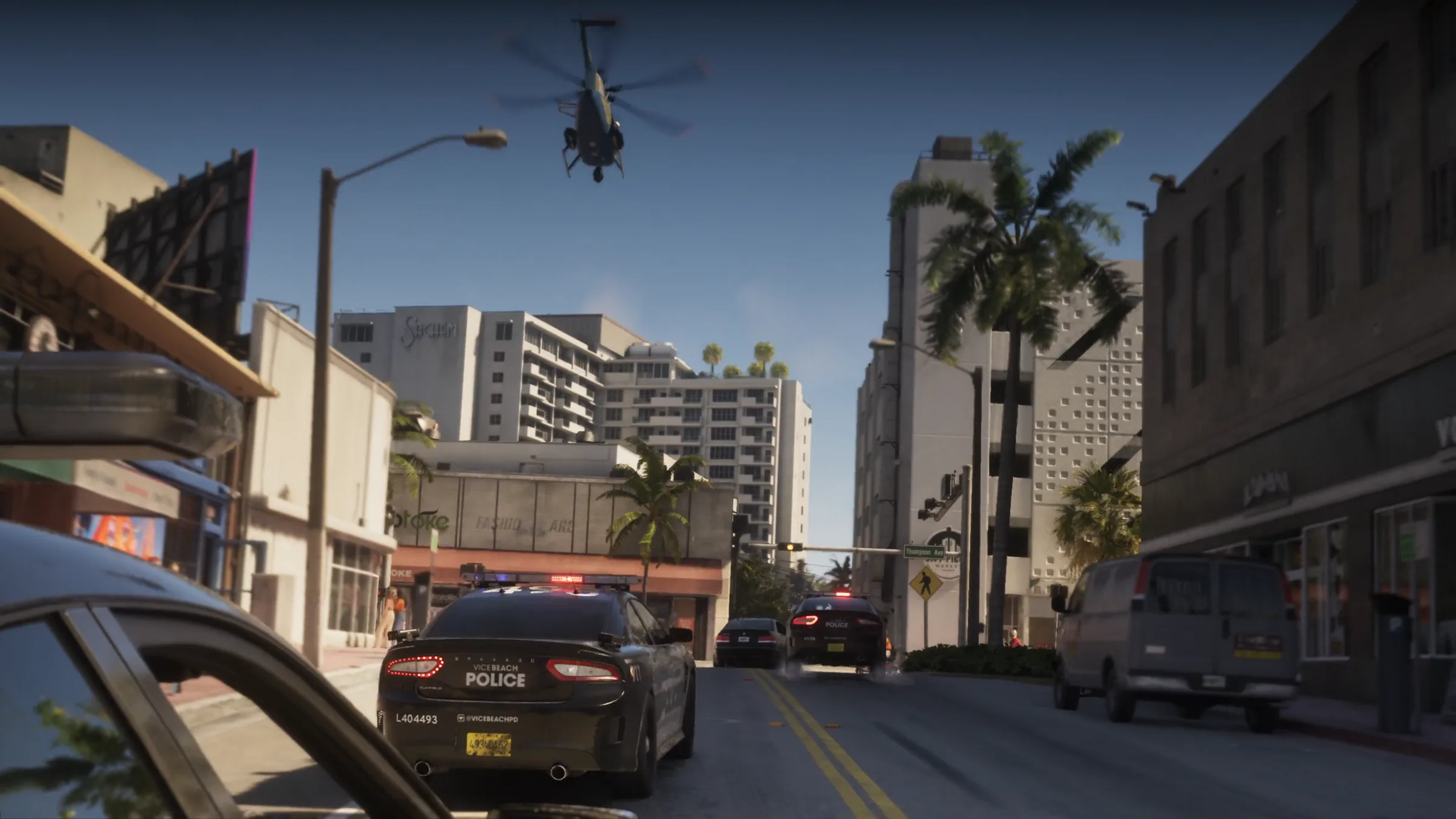
Low-level police could respond to descriptions and search nearby areas. Higher levels could introduce roadblocks, aerial observation, coordinated search zones, more sophisticated vehicle interception and progressively better access to identification information. The game could become harder without abandoning the logic it established at lower levels.
We do not yet know how far Rockstar takes this. What has been described so far is promising precisely because it makes police pressure understandable.
The Criminal Profile is a completely separate problem
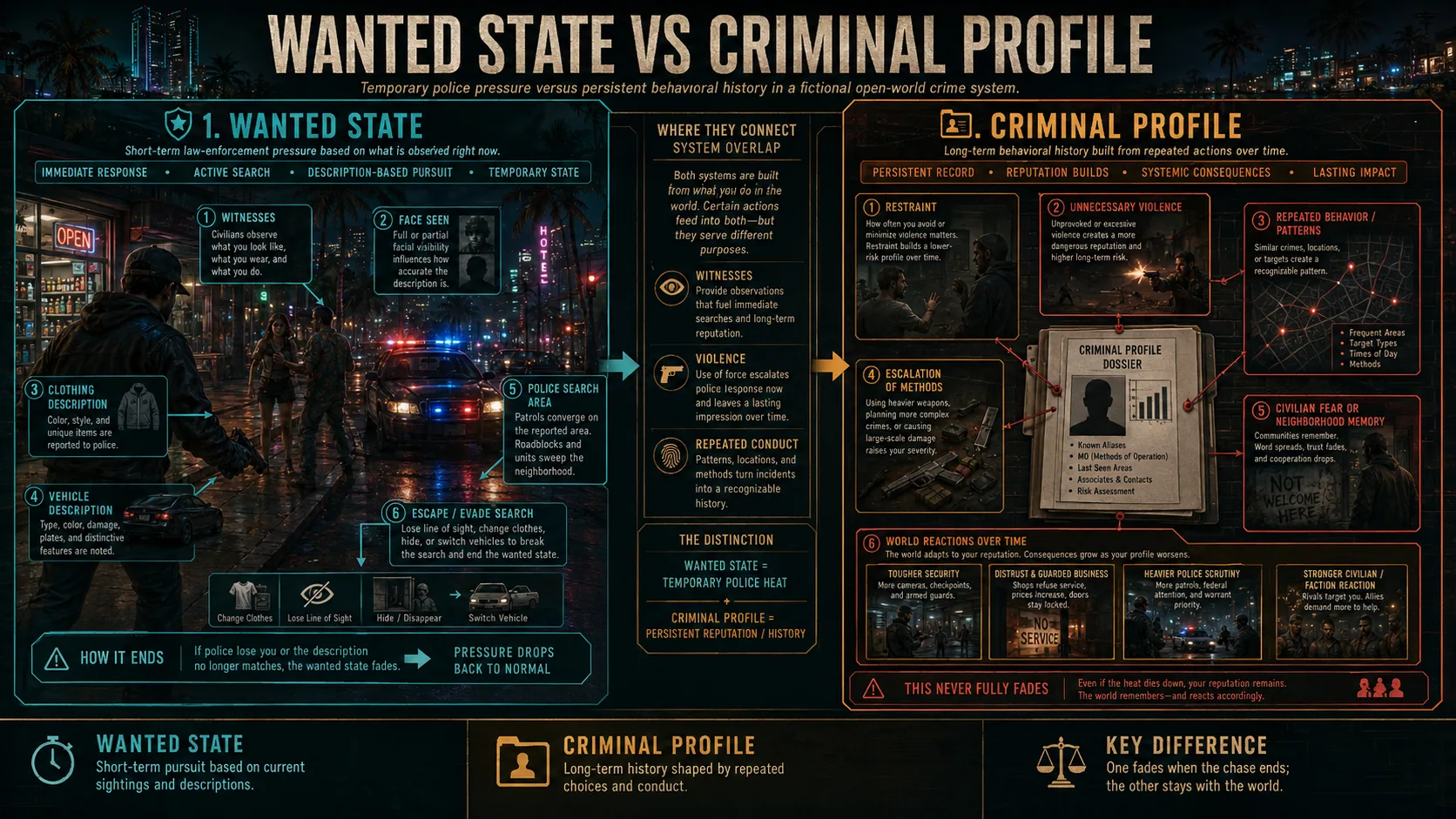
One source of confusion after the previews has been the tendency to mix the wanted system with GTA VI's new Criminal Profile.
They are not the same thing.
The wanted system appears concerned with a particular incident. Who witnessed it? What do the police know? How much immediate pressure are you under? Can they still identify the suspect?
Criminal Profile tracks patterns in how Jason and Lucia behave over time. Rockstar North's Rob Nelson has described it less as a simple good-versus-evil meter than as a record capable of distinguishing how somebody approaches criminal life. Unnecessary violence can matter differently from violence the story forces upon the player, and repeated behavior can influence how the world or narrative responds.
That distinction is important. Escaping the police should not magically erase what kind of criminal you have been for the previous forty hours.
This system could change something GTA players have done for twenty years
One of the funniest habits GTA creates is casual criminality.
Need a car? Steal one.
Want to see what happens? Punch a pedestrian.
Bored at a red light? Introduce downtown Los Santos to explosives.
The world barely remembers any of it, so players learn that actions without immediate consequences have no consequences at all.
If GTA VI's police and Criminal Profile systems genuinely remember more information, Rockstar may be asking players to think differently. Chaos remains available, but chaos becomes a choice with a cost rather than the default interaction language.
That is potentially controversial. Some players want GTA precisely because it allows ten minutes of consequence-free stupidity after work.
Rockstar's challenge is to increase consequence without suffocating freedom.
The most encouraging thing about the new wanted system is that it does not appear to accomplish this by simply making police stronger. Instead, it makes police less magical and asks the player to become smarter.
After five numbered stars, hundreds of police chases and twenty-nine years of Grand Theft Auto, that is a much more interesting upgrade than adding number six.