Nintendo Switch 2 Sold 23.68 Million Units. So Why Does Its First Year Still Feel Weird?
Switch 2 has sold 23.68 million units, yet its first year has produced surprisingly mixed reactions. Here is what Nintendo got right and what still feels unresolved.
By almost any conventional hardware metric, Nintendo Switch 2 is a success.
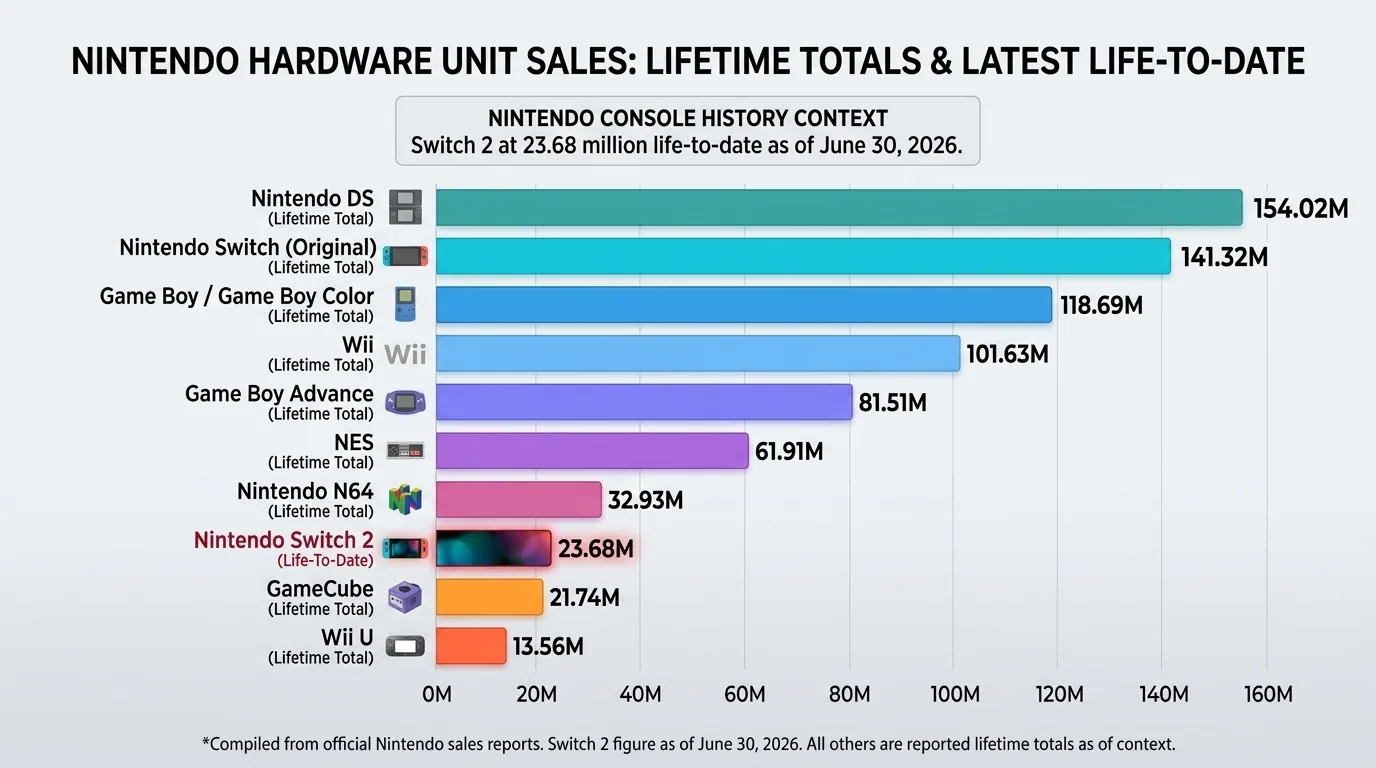
Nintendo's official sales data lists 23.68 million Switch 2 systems sold worldwide as of June 30, 2026, with 58.17 million software units alongside them. Those are extraordinary numbers for hardware that launched only on June 5, 2025.
The strange part is that the conversation around the machine does not always sound like a victory lap.
A year after launch, owners and critics are still asking what the Switch 2 is supposed to become. Some use it constantly. Others describe it as a machine they mainly wake up for Nintendo exclusives. The hardware is selling at a tremendous pace while its identity remains less transformative than the original Switch felt in 2017.
That contradiction makes Switch 2 more interesting than a simple sales story.
Nintendo wisely resisted reinventing the Switch
The original Switch solved an incredibly clear problem.
You could play Nintendo's console games on a television, pull the system from its dock and continue somewhere else.
The concept was so successful that replacing it with another Nintendo hardware experiment would have been reckless.
Switch 2 therefore looks less like a revolution and more like an acknowledgement that Nintendo finally created a hardware format worth keeping.
The screen is larger.
The system is faster.
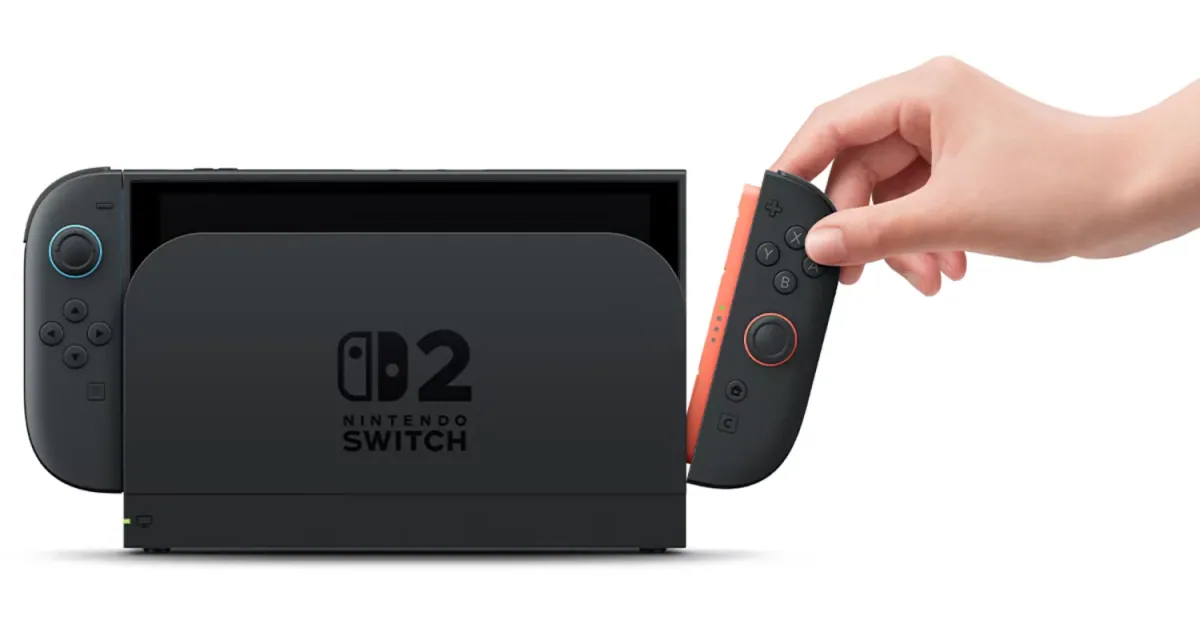
Joy-Con 2 controllers attach magnetically.
The dock supports output up to 4K and up to 120 fps in supported situations.
Handheld mode supports variable refresh rate.
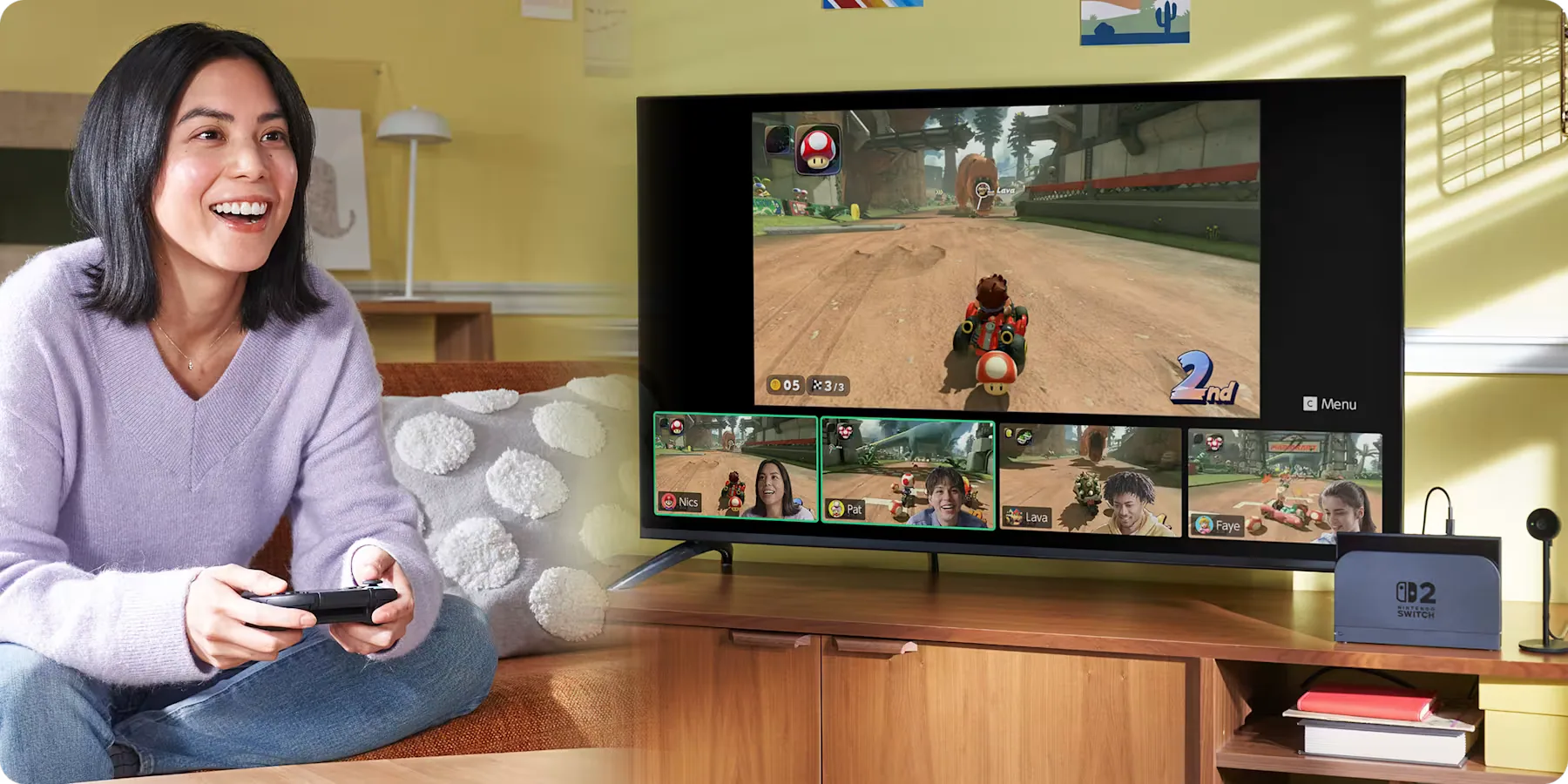
Nintendo added GameChat and GameShare while retaining broad continuity with the older Switch ecosystem.
In practical terms, it is the "Switch, but modern enough" machine many players asked for.
That is also why it can feel less exciting.
The original Switch changed behavior. Switch 2 improves it.
Think back to the original launch.
The ability to take a full console-style Zelda game away from the television felt unusual. The detachable controllers were unusual. The form factor itself needed explanation.
Switch 2 rarely requires explanation because people already understand it.
That is an enormous commercial advantage and a difficult editorial problem.
A sequel console can be dramatically better without providing the psychological shock of a new category.
Laptop generations experience the same thing. A new MacBook can be twice as capable as an old one but still feel less revolutionary than the first laptop a person ever owned.
The Switch 2 may be Nintendo entering that mature-product phase.
Third-party games matter more this time
One of Switch 2's most important improvements is less glamorous than a Mario reveal.
It is powerful enough to receive versions of games that would have been extremely difficult to bring to the original hardware.
Nintendo now points to a broader third-party future, and 2026 has produced examples that would have seemed implausible on the original Switch. Elden Ring: Tarnished Edition, released this week, has drawn attention precisely because a huge modern open-world game now exists in a credible portable Nintendo version.
That matters strategically.
The original Switch became a superb indie and Nintendo machine, but large third-party releases increasingly left it behind as the hardware aged.
Switch 2 has reset that clock.
The question is how long Nintendo can keep it running.
The Steam Deck changed what "portable console" means
Nintendo did not launch Switch 2 into the same world the original Switch entered.
The Steam Deck exists.
So do the ROG Ally family, Legion Go devices and a growing list of PC handhelds.
That means Nintendo no longer owns the idea of playing substantial games away from a television.
A Switch 2 version of a third-party game competes with a Steam copy that may also run on a desktop PC, gaming laptop and handheld.
This creates an uncomfortable value comparison.
Nintendo's strength is simplicity, exclusive software, local multiplayer and a tightly controlled console experience.
PC handhelds offer cheaper game sales, broader libraries, modding and the possibility that the same purchase follows you onto more powerful hardware later.
GameSpot's one-year retrospective captured this tension unusually well, with one editor noting that Switch 2 had become more of an exclusives machine for him than expected because Steam purchases offered greater flexibility.
That is not a universal experience.
It is a new problem Nintendo did not have in 2017.
GameChat is more important than it initially looks
Nintendo's online services have historically felt oddly disconnected from how modern players communicate.
Switch 2's GameChat is therefore interesting because Nintendo finally built a more direct social layer into the hardware.
Players can talk using the system microphone, share screens and use compatible cameras for video chat. After the initial open-access period ended in March 2026, GameChat became tied to Nintendo Switch Online membership.
Whether the feature becomes essential is unclear.
Discord is deeply established.
Children's accounts require additional safeguards.
Many adult players already have a preferred communication platform.
Still, GameChat signals something important: Nintendo understands that a modern console is partly a social environment rather than just a box that runs software.
The software problem is partly a problem of expectations
Following one of the most successful consoles ever made is miserable work.
Players expect a Breath of the Wild-scale revelation every year.
Investors expect enormous franchise releases.
Existing Switch owners need enough reason to upgrade.
New owners expect software that visibly justifies the new hardware.
Nintendo cannot satisfy all of those demands continuously.
That tension became visible this summer when investor disappointment around the future software pipeline helped push Nintendo shares lower despite the console's strong sales. Reuters reported concerns that Nintendo's June presentation lacked the sort of major flagship title investors wanted for the coming holiday period.
This does not mean Switch 2 lacks games.
It means hardware momentum and software excitement are not the same thing.
The first year may ultimately look better in hindsight
Consoles are strange products to evaluate twelve months after launch.
Their hardware barely changes, but their meaning changes enormously as the library grows.
The PlayStation 3 at one year was not the PlayStation 3 people remember.
The original Switch before several years of Nintendo releases was not the mature platform that ultimately sold more than 150 million units.
Switch 2 has already solved the hardest problem: people want the machine.
Nintendo's own numbers prove that.
What it has not yet fully solved is why somebody who already owns several modern gaming devices should choose the Switch 2 version of a game that exists everywhere else.
Nintendo exclusives answer that question occasionally.
Portability answers some of it.
Simplicity answers another part.
The second year needs to make those answers feel less occasional.
Switch 2 is not failing to become the original Switch again.
It may simply be revealing something Nintendo has not experienced often: the awkwardness of following a product whose basic idea was already almost exactly right.